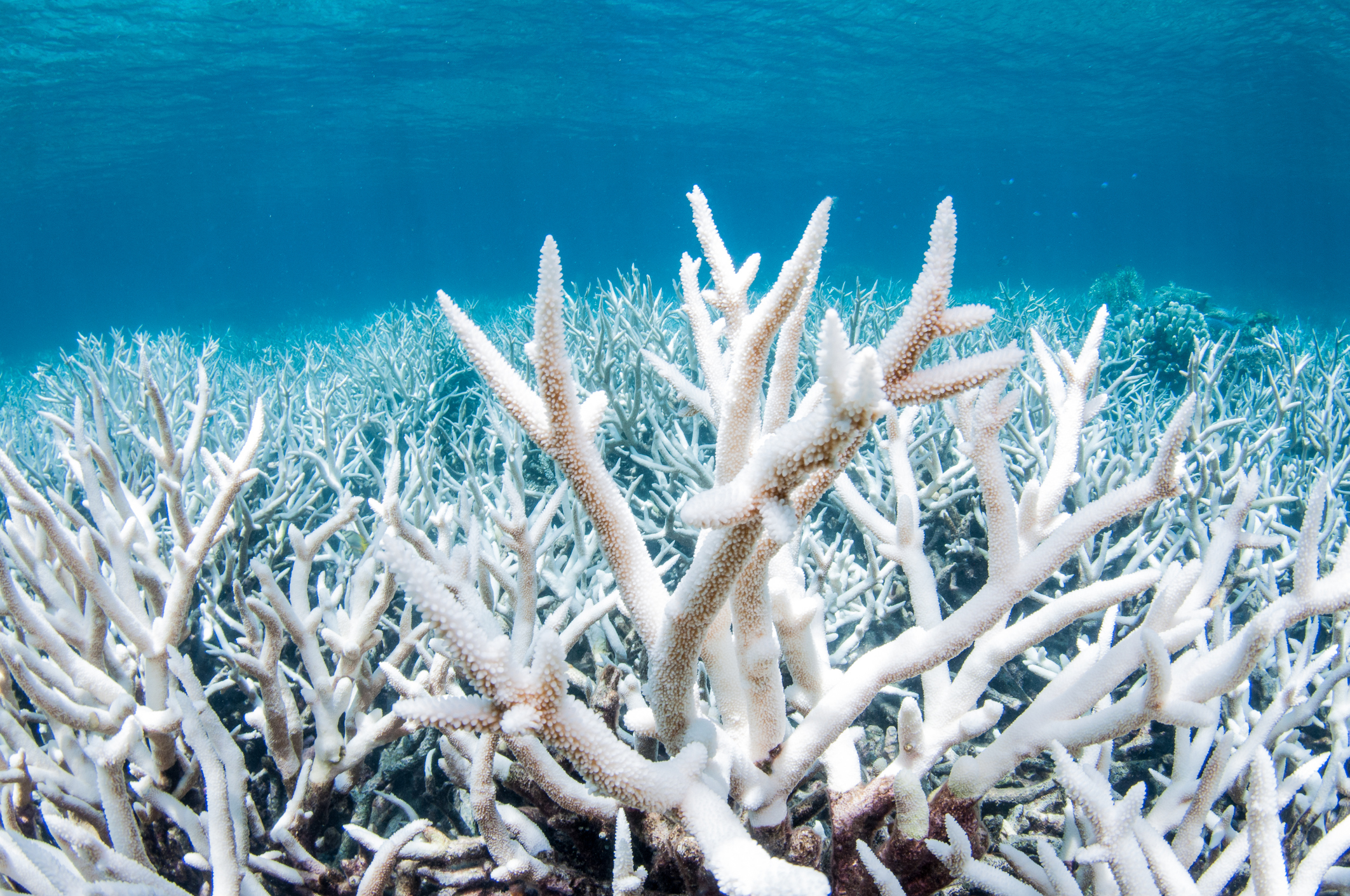
Paradise Drowning

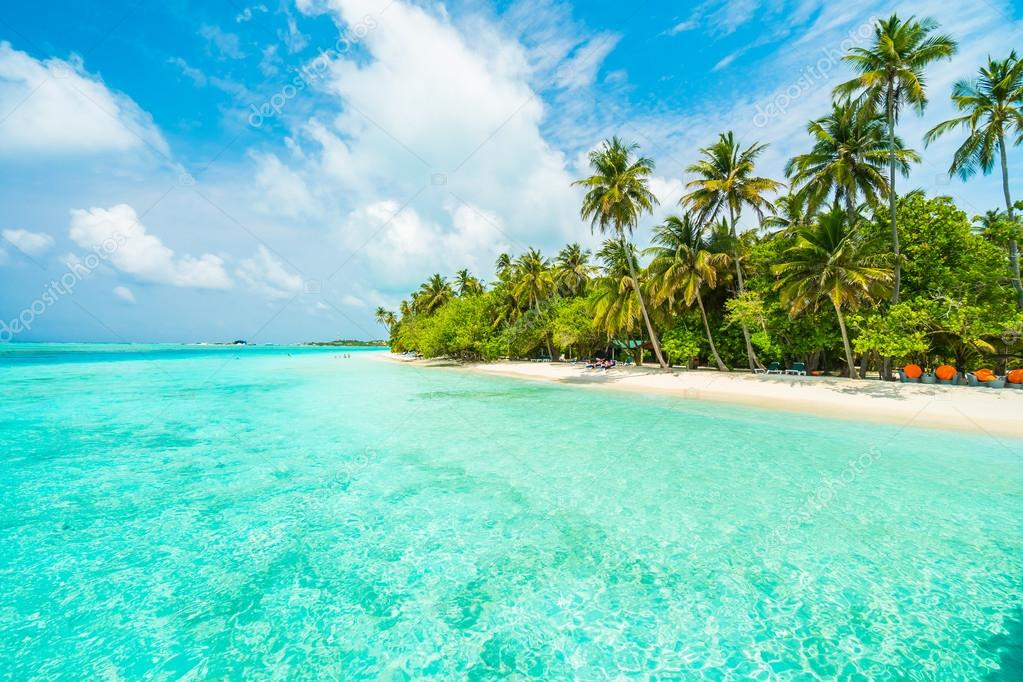
A Beach in the Maldives

Just look at the clear blue waters, white sand beaches, and tropical atmosphere in the image above, it all looks so fabulous. Can you imagine if this paradise was submerged in water? If you can’t, then I have some news for you. Recently I traveled to this paradise and stayed in the Radisson Blu Island Resort, which was an amazing experience and something only possible in the great country of Maldives. The Maldives is famous for its heavily scattered islands and its over-the-top island resorts, but due to global warming, the country faces a major problem. It deeply saddens me that in only about 30 more years what I have done this summer, traveling to the Maldives, won’t be possible for anyone ever for the rest of time due to the Maldives being uninhabitable. The problem has gotten so bad that the president of the Maldives has only three months left of fresh groundwater to drinking due to his island’s well being flooded with salt water.
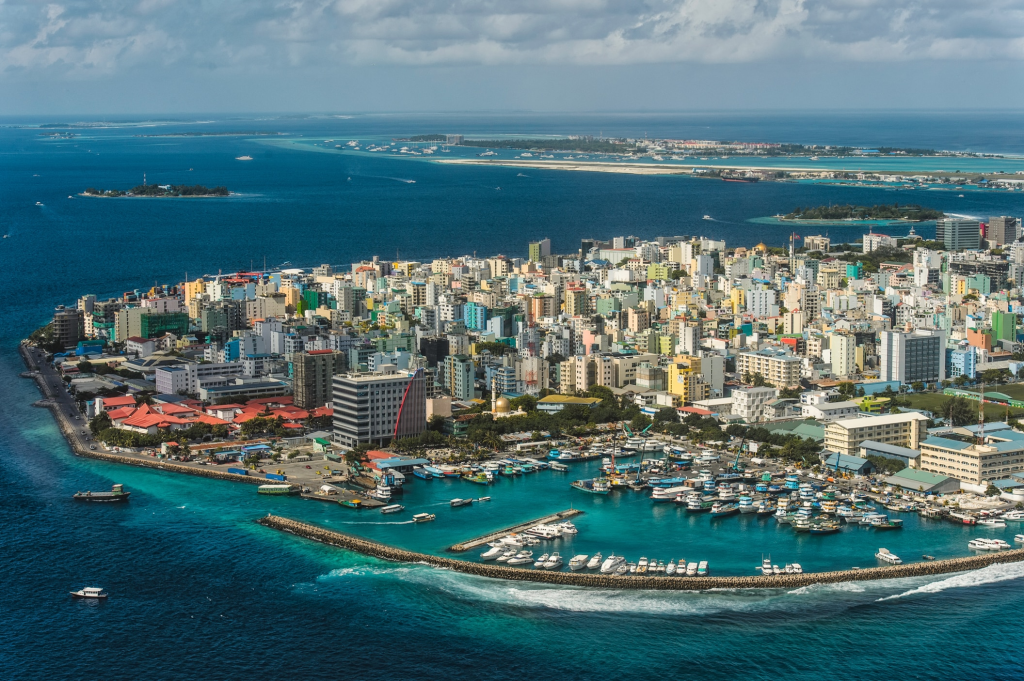
Male, Maldives

The Maldives is the lowest country in the world, meaning that any significant rise in the sea level could be disastrous for the half a million inhabitants on the islands. They already face immense flooding and erosion, largely part to the dead/dying corals. These undersea plants serve as natural barriers protecting the coastline from flooding. All over the world coral reefs are dying at alarming rates, due to bleaching events which I have talked about in a previous blog post. The Maldivian government is forced to use unorthodox methods to combat this rising water crisis. Personally, I think that what they have been doing is really fascinating. The people of Maldives have started using 3-D printing as a way to combat the coral crisis. The basis of this idea is that a 3-D printed base for a coral to grow on is created. From this base, they install live coral specimens, meaning they are effectively regrowing their reefs back with technology! Many sci-fi movies try to depict what a futuristic world could look like by showing floating cities, cities in space, underground cities, etc. Well, the time has almost come for phase one of this new world, floating cities! The Maldives is currently working on a project to create the world’s first city on water, which always stays on the surface and rises, with the water.
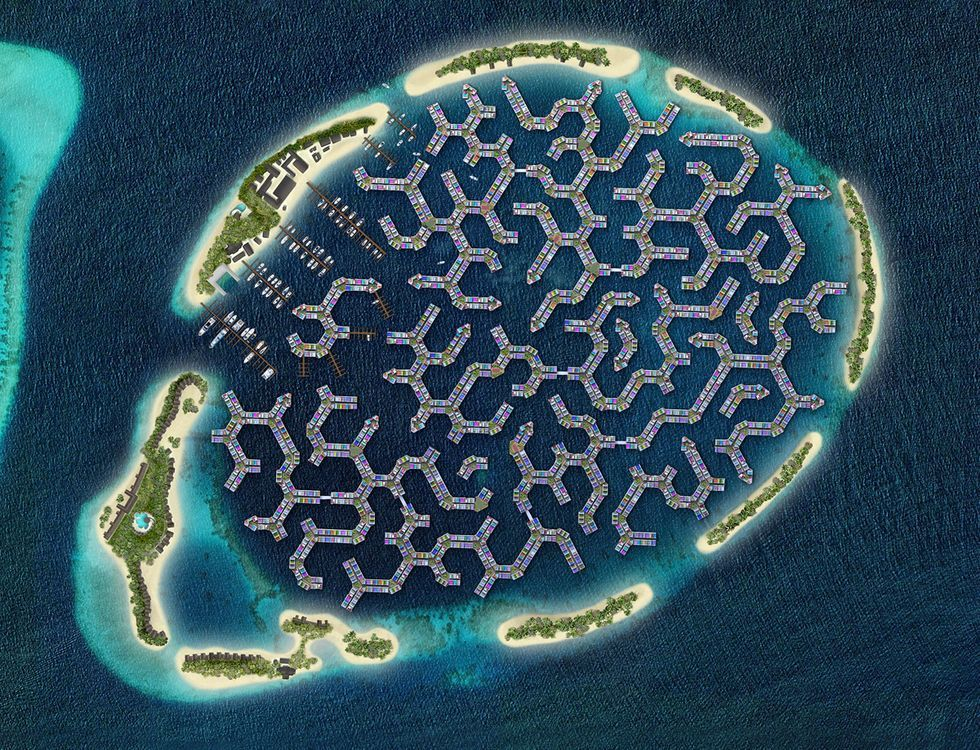
Maldives Floating City

Its hexagonal shape is meant to represent a mix of the human brain and coral. The MFC, or Maldives Floating City, is being built by the group known as the Dutch Docklands. After viewing their video showing the model of the city, which you can view below, some questions have formed in my mind.

The Showcase Video

I feel that the model lacks exploitable farmland. As you can see from the birds-eye view of the city, it appears that about 75% of the land in the city is being used for homes, with almost no farmland. This means that almost all of the materials this city will need must be imported from other countries, making it a very dependent city. And since the cost of living isn’t necessarily I’m assuming it will have a surplus of any material necessary, otherwise you wouldn’t be paying $250,000 for 1000 square feet. If it lives up to its potential of always staying above the water it will eventually, assuming no other islands are created in time, be one of the only islands inhabitable in the Maldives. Since the price of living in these islands is already more expensive than in America (about 100k-200k per 1000 square feet), many of the current Maldivians will not be able to live in these homes. Although a good idea if carried out in bulk with many other islands, this idea will be only affordable as a getaway vacation for the rich and wealthy of the world if it is the only one of its kind, which I’m sure it won’t be.

https://depositphotos.com/111844128/stock-photo-beautiful-maldives-island.html

https://www.popularmechanics.com/science/environment/a36231724/maldives-floating-city/

https://abcnews.go.com/International/facing-dire-sea-level-rise-threat-maldives-turns/story?id=80929487#:~:text=At%20the%20current%20rate%20of,the%20Maldives%2C%20told%20the%20U.N.

  • Paradise Drowning

    Just look at the clear blue waters, white sand beaches, and tropical atmosphere in the image above, it all looks so fabulous. Can you imagine if this paradise was submerged in water? If you can’t, then I have some news for you. Recently I traveled to this paradise and stayed in the Radisson Blu Island

    read more


  • My Novel

    I am writing this to share the news of my new novel. It is going to aim to spread some positive light on the environmental science field. I will be interviewing many professors and will be asking them questions like: • Your name, role, and work focus • how did you become interested in this

    read more


  • Hurricane Season in America

    Southern America is known for its hurricanes and tropical storms. These hurricanes have been shown to occur from June 1st to November 30th, in the Atlantic. And May 15th to November 30th in the pacific. We’ve seen the most devastating hurricanes within this time frame, such as Hurricane Katrina, Hurricane Maria, and Hurricane Jeanne. The

    read more


My Novel

I am writing this to share the news of my new novel. It is going to aim to spread some positive light on the environmental science field. I will be interviewing many professors and will be asking them questions like:

• Your name, role, and work focus

• how did you become interested in this work?

• why did you choose to follow this career path?

• What education did you need to have to get to where you are today?

• what is the best part of your role?• what do you struggle with the most?

• what you would want others to know about the work of environmental science majors?

So far I have only gotten one interview in, but I learned lots of valuable information about the environmental science field. I would anticipate this to be available for reading sometime in the near future. Right now my goal would be to finish this before April.

My first interviewer, Dr. Douglas, is the assistant professor of environmental science at Dickinson College. She has been working at Dickinson for 3 years and has spent 2/3’s of it being a teacher, but the interesting stuff is what’s in the other one third. Douglas has been around the world for projects, with an overall goal of designing a more ecological approach to pest management. So far she ahs helped by introducing no-till farming, pesticide coated seeds and more. No-till helps reduce soil erosion and the greenhouse effect.

Hurricane Season in America

Southern America is known for its hurricanes and tropical storms. These hurricanes have been shown to occur from June 1st to November 30th, in the Atlantic. And May 15th to November 30th in the pacific. We’ve seen the most devastating hurricanes within this time frame, such as Hurricane Katrina, Hurricane Maria, and Hurricane Jeanne. The biggest similarities with all 3 of these large hurricanes, minus the destruction, is their locations being very close to one another.

Hurricanes are defined as having low pressure eyes, with winds over 100 mph swirling around the eye in a spiral shape. A hurricanes ability to cycle around an eye is greatly due to the earth’s rotation. As climate change becomes a growing issue hurricanes are also affected. As global temperatures rise hurricanes happen more frequently, and more intensely.

These hurricanes have become almost like a culture in the American south. Can you believe it? A culture of routine destruction, like clockwork. These states have dealt with yearlong damage which I can only imagine. One of my best friends family had to leave New Orleans after Hurricane Katrina because their business was destroyed and had to be relocated to where we both live now.

While many people believe that hurricanes are bad for cities, there are other weather related phenomena that can be amplified with global warming. These other phenomena threaten the very existence of some states. Current sea-level projections predict that by 2050 or sooner much of Florida will be underwater. For example, the link provided in the bottom f this post give you guys access to a website I found that shows an interactive map for the southeastern part of America as the years go by and the level of seawater get higher.

To conclude, I would say that given the state of global warming and climate change it is very likely sometime ion the distant future that we will have to say goodbye to a few cities in Florida, including Miami, as they will be flooded out. They will be flooded out by the naturel increase of the sea-level if not by being bombarded by hurricanes, which increase their intensities as temperature increases.

https://www.americangeosciences.org/critical-issues/maps/interactive-map-coastal-flooding-impacts-sea-level-rise

Burning California

California is currently in the midst of large scale wildfires, as you should already know if you follow any sort of new media. The current fires blazing in California is the El Dorado Fire, which is reportedly started from a gender reveal party where the parents use a pyrotechnic device to reveal the gender of the baby.

Forests are the most common ecosystem in America. They are the climax community in succession. Before forests become forests they start off from barren rock, with no living organisms. When we think of barren rock we usually don’t envision a thick layer of trees. But thus the reason for ecosystem to succeed one another. After forest fire’s burn through a forest it never fully recovers, and often shows that through the rings of the trees. The post forest fire ecosystem is the secondary succession.

California has a history of forest fires. California’s wildfires has been recorded since 1932. One reason as to California’s annual burning is the changing climate. As temperatures increase vegetation and trees dry out earlier than supposed to you, making easy fuel for a fire. But when paired with hot days in September, it can cause a problem due to the heat being an igniter of the flames.

Recently, many fires have been started by human actions. The El dorado fire is an example of that. Also, they can start from lightning, downed power cables, live wires, and sadly arson.

Link to article

Remdisivir and It’s Effect On COVID-19

This pandemic has everybody worked up. So as scientists further their research towards a working vaccine, doctors are using the antiviral medication known as Remdesivir to help reduce risk from COVID-19. The drug was developed as a way to treat viral infections such as Ebola, MERS, SARS, and even COVID-19.

The medication is not an end all be all solution. Rather it works as a way to slow down the spread of the virus throughout the body. TIME published a virtual representation of the virus shown below:

How Remdesivir Works to Fight COVID-19 Inside the Body | Time

This image is depicting the virus entering a cell.

Once the virus enters the cell it releases its genetic code (RNA strands) into the cell. That genetic code equips the cell with the means of creating more copies of the virus

The RNA then attaches itself to the chromosomes of the cell replacing the original cells own RNA with the virus’ RNA and protein synthesis begins for the virus.

In order for the RNA strand to be duplicated it must use the viral proteins created from the original RNA strand. So, the proteins continuously copy themselves within the ribosomes until a completely copied strand of RNA is produced.

A newly formed virus then leaves the cell with guidance from the host cell, and spreads throughout the body to infect other healthy cells.

Now this is the part where Remdesivir kicks in. The drug can act as a false substrate in the enzyme of the ribosomes. Attaching the particles with an incomplete RNA copy. Which deters the production of the virus in the cells.

The creation of defective RNA strands leads to defective virus that can not insert it’s genetic code into other cells.

As you can see from the GIF’s above, Remdisivir is NOT a cure. Rather it is an ointment to quicken the recovery process. Right now it is only being administered to patients in severe condition, due to the way it has to be administered, which is an IV infusion. IV bags are only given to patients in the ICU units or people in severe condition.

A study conducted by the New England Journal of Medicine shows results of patients who used Remdesivir during their recovery. Of the 61 patients observed (8 patients could not be analyzed) 36/53 showed improvements in respiratory functions, a 68% effective rate. 25 of the 53 were discharged (47%), and a mortality rate of 7/53 (13%). The normal mortality rate of ICU patients is 26%, presumably without the use of remdesivir, or significantly smaller doses of Remdesivir. The numbers don’t lie. But I believe that it should be looked into by the FDA first before it can go mainstream, because anything can happen in one study.

https://time.com/5839932/how-remdesivir-works-coronavirus/

https://www.fda.gov/media/137566/download

https://www.ncbi.nlm.nih.gov/pmc/articles/PMC7195980/

The Dark Age of the Universe

Billions of years ago the universe was simply hot dense compressed matter. Everything as we know it resided in what was known as, according to Georges Lemaitre, a primeval atom or “cosmic egg”. It seems pretty crazy, huh. Every rock and natural landmark ever seen in the universe condensed to the size of a singular atom, with infinite mass, obviously.

Without “Cosmic Egg” There Would Be NO “Big Bang” – Science Vibe
A computer generated model of what could have been our universe as a primeval atom

But like any other it needed to hatch, and about 13.7 billion years ago it does. The ever expanding universe we know today is born. After the Big Bang the universe became dark due to the simple fact of nuclear fusion not occurring and therefore stars not being present to provide light. Nuclear fusion is the process of two hydrogen atoms fusing to form a helium atom, while releasing energy as a by product. The electromagnetic energy being released contain visible light wavelengths which are seen by us on earth. So, the dark age of the universe is essentially the time between the afterglow of the big bang, although the afterglow is still measurable today in the form of Cosmic Microwave Background (CMB), and the birth of the first stars. The mystery of this era is how nuclear fusion started and what brought the two atoms together. Now as we all know we won’t fully be able to know what happened, because it happened over billions of years ago. But scientist have been looking for signals.

For example, researchers from the University of Washington, the University of Melbourne, Curtin University and Brown University have been looking for this signal in order to help shed some light onto the starless era of the universe. The signal is found in low intensity wavelength’s emitting from the neutral hydrogen, which was very plentiful due to stars not being around to ionize the hydrogen. All objects emit radiation (Black-Body), according to Gustav Kirchhoff. The intensity of wavelength’s are based on the distance between the peaks of the waves. The closer they are together the higher the intensity of the wave is. The researchers claim that the wavelength was 21 centimeters, 13 billion years ago, but after the years of expansion the length has increased to 3 meters. The international team of researchers use a precise radio telescope picking up the electromagnetic energy from that neutral hydrogen. But it’s not that easy. There are billions of different celestial bodies emitting low levels of radio waves including our own satellites and telescopes. The international team are discovering new methods of filtering out the space “noise” and hopefully soon in the near future we can uncover the secrets of the dark age of the universe and how our starry universe today came to be.

Terms:

ionize: convert (an atom, molecule, or substance) into an ion or ions, typically by removing one or more electrons.

radio waves: a form of weak electromagnetic energy; radio waves have the longest wavelengths, and therefore contain the least amount of energy

https://phys.org/news/2020-06-scientists-billion-year-old-universe-dark-age.html

https://astronomy.swin.edu.au/cosmos/N/Neutral+Hydrogen

https://scitechdaily.com/what-was-the-universe-like-before-the-big-bang/

https://sciencevibe.com/2016/05/04/who-was-big-bang-daddy-hint-not-edwin-hubble/

The Coral Reef “Pandemic”

As our planet continues to change many ecosystems face major adversities. Coral reefs are one example.

The reef ecosystem is full of flowering diversity. The coral’s act as the backbone for the environment by housing the algae and photosynthetic organisms that help to keep the coral alive. That same algae is fed on by small fish and the small fish is eaten by a bigger fish. This circle is continued until it reaches the top predator of the reef which includes the sharks, jacks, and trevallies. They serve as prime tourist locations for snorkeling diving, and fishing.

Coral reefs are not just valued for their tourism and natural beauty. Throughout history mankind has relied on fishing as a means of food, much of that fish comes from the reefs. Coral reefs only make up about 1% of the ocean floor but are home to 25% of the oceans species of fish. Also, Coral reefs actually protect our coastlines. The coral acts a barrier preventing storms, high tides, waves, and floods.

Unfortunately, due to our own actions as human beings, the biodiversity of the reefs and the health of the corals have drastically decreased. Coral reef’s depend on algae for their bettered survival. The coral uses the oxygen from the photosynthetic algae. Bleaching happens when the algae living on the coral is expelled back out into the sea, usually due to changes in temperature, light, or nutrients. Mass bleaching isn’t an immediate life sentence for the corals it just puts them in a really vulnerable state, making them susceptible to nearly anything.

Coral Bleaching In the GBR
This is a picture of a healthy coral

In this picture you can see the white stems of the coral flourished with algae that helps keep the coral alive. You can even see fish swimming above, which is a sign of a healthy coral reef. Some fish rely on the corals to keep them alive, an example of this is in the movie “Finding Nemo.” In the movie, Nemo’s dad talks about the symbiotic relationship between clown fish and Anemone, his dad says that they depend one each other for life. These symbiotic relationships are staples of the ecosystem and cannot be done without the backbone of the reef, coral, being healthy.

Great Barrier Reef Bleaching More Widespread Than Ever | Time
This is a picture of a bleached coral.

The lack of life in the picture is noticeable. There are no fish or plants in this reef, making it practically useless for fishing and snorkeling. The bleached coral is also providing less protection.

https://conbio.onlinelibrary.wiley.com/doi/full/10.1111/j.1523-1739.2007.00754.x?casa_token=iV7kWpVU_g0AAAAA%3A-asajL_A1bUIatIBliaeWfwrmr_K2rHUhB2rOD8MKSouemdHznNEvOsSurtLMNFcdIm7c8fZkkdHRw

https://oceanservice.noaa.gov/facts/coral_bleach.html

https://www.hindawi.com/journals/jmb/2011/725602/

https://oceanservice.noaa.gov/facts/coral_protect.html

How Deforestation relates to Corona virus

As all of you already know the novel corona virus has been running rampant for about 5 months now, and is showing no signs of stopping. Scientists have been searching for not only a cure but an animal source for the virus. Deforestation is no new thing for humans. The Amazon rain forest is a prime example.

The amazon rain forest has been under heavy siege for almost 50 years now. Mangabay, an environmental news channel, states that, “Since 1978 over 750,000 square kilometres of Amazon rain forest have been destroyed across Brazil, Peru, Colombia, Bolivia, Venezuela, Suriname, Guyana, and French Guiana.” This figure has caused a variety of ecological changes, such as species extinction, climate change, and most important in relation to current events, habitat loss.

For example, invasive species are organisms that are in their non-native habitat, and can cause detrimental changes to its new habitat. The Everglades in Florida have been going through massive changes since the addition of the Asian Burmese python “virus” into the environment. Due to the python being completely new for the animals living there, they won’t be able to adapt right away. Which can lead to the python being able to do things that wouldn’t be achieved in it’s native habitat.

When we compare invasive species to the origin of corona virus similarities are present. The corona virus is assumed to be derived from either a bat or a pangolin, the scaly anteater. Both of these animals have different genetic codes than us, which can cause the world of difference in the virus upon entering humans, compared to being harmless in it’s native species. This is similar to how the Burmese python is in it’s natural it is seen as just another snake, in Southeast Asia.

Now we ask ourselves how are the two related. When deforestation occurs it forces the native animals outside their own ecosystem, and closer to our livestock. Once the infected species are sharing habitats with our livestock and domestic animals, disease can spread. In Malaysia, many trees were cut down for farming land, with all the deforestation the fruit bats were left with no other choice but to migrate. They migrated closer to farms and livestock leaving pigs being infected, by eating fruit that was nibbled on by the bats. Eventually the disease reached humans, beign that it was already in our farms, and left 105 people dead.

So, among the wide span of problems we face as a result of deforestation, habitat loss is one that should not be overlooked. Because, unlike other difficulties such as climate change and collapsing ecosystems, nothing hits closer to home than preventable deaths among the community.

https://rainforests.mongabay.com/amazon/amazon_destruction.html

https://www.evergladesholidaypark.com/python-problem-in-the-everglades/

https://www.nationalgeographic.com/science/2019/11/deforestation-leading-to-more-infectious-diseases-in-humans/#close

Quick Message to My Fellow Students

In light of the nationwide school shutdown, I thought I would some ways you can stay productive in the days off.

The smartest thing to do right now is to stay productive every weekday. Be on top of the countless emails being thrown your way, and do any school work that is being assigned to you. Also, I find that making a schedule can help in many ways. It can help balance your sleep schedule. I have a notoriously bad sleeping schedule during breaks, sometimes I even wake up 1:30. Part of the reason for that is because of how deeply I sleep another, bigger, reason is my lack of scheduling/ a routine during breaks.

The best ways to fill up your schedule is with both physically and mentally productive activities. For example, you can bike around your neighborhood, which still maintains good social distancing, because you will be moving faster than any walkers on the sidewalk, and can move around them. Being productive mentally is basically how much information you want to retain, so that when next school year comes you won’t be unprepared for the content. You can even do non-school related learning. Many different Ivy League colleges provide hundreds of different online courses that you could be involved with (I will link the website at the bottom of the post). Its been a few weeks now so I have a rhythm going, at least on weekdays. So I encourage you to make a rhythm for yourself, if you don’t already have one established.

https://www.freecodecamp.org/news/ivy-league-free-online-courses-a0d7ae675869/

COVID-19 Pandemic

Currently the world is in a state of panic and distress as we are attempting to combat the global pandemic of COVID-19. As of the day im writing there are about 265,500 cases worldwide and a death toll of 11,113. This means the death rate is about 4.12%. This information may not come as a shock to many, because of the efforts under effect right now, such as: the shutdown of all sporting events, nationwide school cancellation, and the enforcement of social distancing.

Right now Italy is in deep. They are currently the country with the most COVID-19 deaths, greatly surpassing China’s 3,100 deaths, with numbers of over 4,000 deaths. But, what’s more alarming than the death toll, which makes up almost 40% of the total death count, is that they have significantly less total cases than China. So, why is the virus affecting Italy in such way? Well, the short answer lies in the economy. No matter how many laws you put in place that stresses social distancing and hygiene if a country can’t financially support the wave of patients, then the obvious result is deaths that could have been prevented.

But the virus is also devastating the homeland.

The corona virus’ curve is exponential, which makes it nearly impossible to completely reverse back to 0 in a short time frame, so the main goal right now is to “flatten the curve”. Infectious disease expert, Dr. Dennis Carroll said in an ABC news interview, “The speed at which this virus is spreading across America that if we let it continue to infect at the direction it is now, using the limited interventions we have now within 3-4 weeks our health system is going to completely collapse. It’ll be overwhelmed by the number of people seeking urgent care. Flattening the curve is basically what can we do to profoundly impact on the number of people that are being exposed and infected and if we don’t really take the kind of actions that are being now undertaken in California and elsewhere that we are in a really a historic position of facing a health crisis that we’ve never faced before so flattening the curve is basically how can we reduce the number of people exposed today so that three weeks from now the numbers of people showing up at the health facility are fewer than those that were showing up the day before.”

Seeing the graph above we are well in the same direction Italy has gone, and without major precautions being done, we will pass a threshold that our health system can not comprehend, a threshold that has already been reached in Italy. But, it seems like South Korea has managed to flatten the curve, as seen in the graph.

The virus has impacted almost every country by now, and each government has tackled the pandemic in similar ways, but at different levels. South Korea, the country that has flattened the curve the most since the start of the pandemic, implemented mass drive-thru testing centers with the means of testing a max capacity of 20,000 tests, daily. The CDC has reported that 25,000 test have been conducted, as an entire nation. I’ve always believed in the power of testing. Because the virus takes days, and sometimes weeks to show symptoms, due to a longer incubation period. This makes it a necessity to test first, then isolate, because you may very well be in quarantine with an infected person, but you yourself may be healthy. Also, confusion tends to spread without mass testing. You may have the symptoms of the virus, but you haven’t been tested, so in your mind you presume you are healthy, which affects how much precautions you to take in order to not infect others.

https://time.com/5804899/u-s-coronavirus-needs-follow-s-korea/

https://gisanddata.maps.arcgis.com/apps/opsdashboard/index.html#/bda7594740fd40299423467b48e9ecf6

https://www.worldometers.info/coronavirus/country/italy/

https://www.worldometers.info/coronavirus/country/us/